One camera.
A place in your mission.

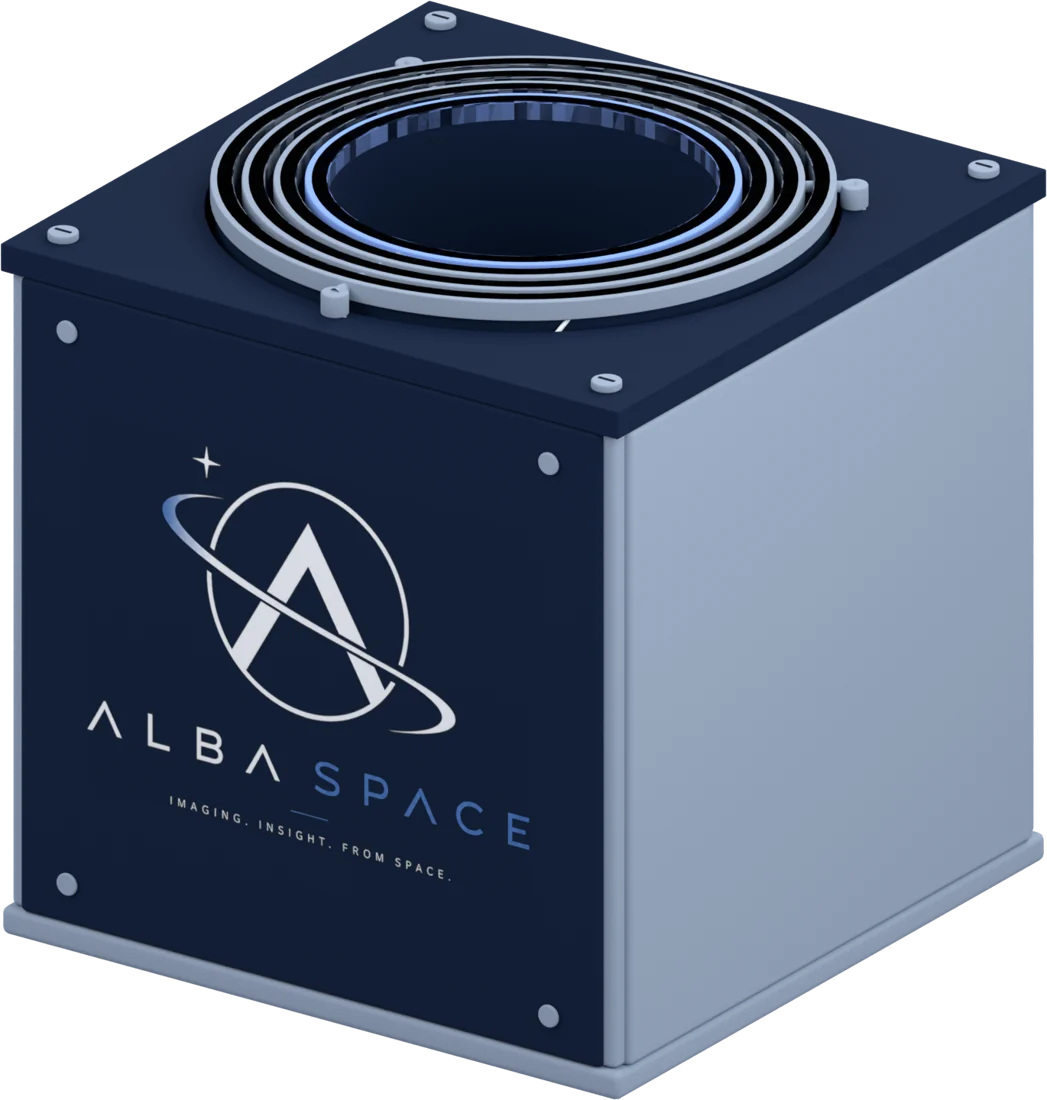
Ark Light 1 brings three optical functions into one CubeSat design. It is being integrated in the lab and has not flown yet.

The design uses stars as a reference to estimate orientation.

Ark Light 1 · flight design, in lab integration
Concept of Ark Light 1 integrated into a CubeSat above Earth

Conceptual exploration of the optical design.

Concept · Integration illustration; not an actual mission
Mass, with the mechanism
175 g
Stowed volume
0.13 dm³
Power
1.25 W
For CubeSats from
3U a 12U

A single camera does three jobs.

In a traditional mission, attitude determination, watching for space debris and docking with another vehicle require different cameras and equipment: more cost, more mass and more power. Our instrument runs all three algorithms in parallel, on a flight computer with a real-time operating system.
How it knows where it's pointing.

It solves on its own what is called the «lost in space» problem: knowing nothing beforehand, it photographs the sky, recognizes the stars and calculates its orientation.

Simulation

Debris hidden among the stars.

Between two consecutive photos the stars do not move, but debris and satellites do. The instrument subtracts one photo from the other, cleans up what is left over and keeps what moves: its position, heading and speed.


Simulation

A zoom made of structure.

The baffle does more than block light. Extending it moves the optics and changes the focal length: the same sensor goes from watching more than 20 degrees of sky to a close view of the vehicle it is about to dock with.

Field of view
22.0°
Focal length
16 mm
Mode
Orientation
Simulation

Ark Light 1, inside.

The flight computer, the sensor, the optics and the telescopic baffle, piece by piece.

A baffle that deploys on its own in orbit.

A fixed baffle takes up valuable volume at launch. Ours travels stowed, less than 50 mm long, and extends once it reaches orbit.

  • Up to half the volume

    It blocks stray light in orbit without taking space from the CubeSat payload: 0.13 dm³ stowed and 0.28 dm³ deployed.

  • Release with a backup

    A dual circuit cuts a wire by heat and spring-loaded guides push each segment into place.

  • Built for vacuum

    Teflon bushings keep the metal parts from cold-welding in vacuum, so it works after months in orbit.

Illustration · Design proposal

Stowed for launch · 0.13 dm³

Where we are heading: in orbit.

Ark Light 1 mounted on the face of a 6U CubeSat, in orbit above the Earth Concept · Illustration

One instrument, many missions.

Illustration

Let's put your mission in orbit.

For preliminary design reviews, integration proposals or whatever your mission needs, talk to the engineering team at Alba Space.

The Alba Space website, in Spanish and English